
Our Policy Priorities
The Solution:
Instruction, Policy, & Investment
Pennsylvania can dramatically improve literacy outcomes by aligning instruction, policy, and funding around what decades of research show works.
What Works: Evidence-Based Reading Instruction
Decades of scientific research show that reading is not a natural process. The brain must be explicitly taught to decode, connect sounds to letters, and build fluency and comprehension.
The science of reading reflects the body of research on how children learn to read and how educators can most effectively teach them. States that have aligned policy, training, and instructional materials with this research have seen measurable gains in student outcomes.


Pennsylvania’s Progress
Pennsylvania has laid important groundwork through recent legislation:
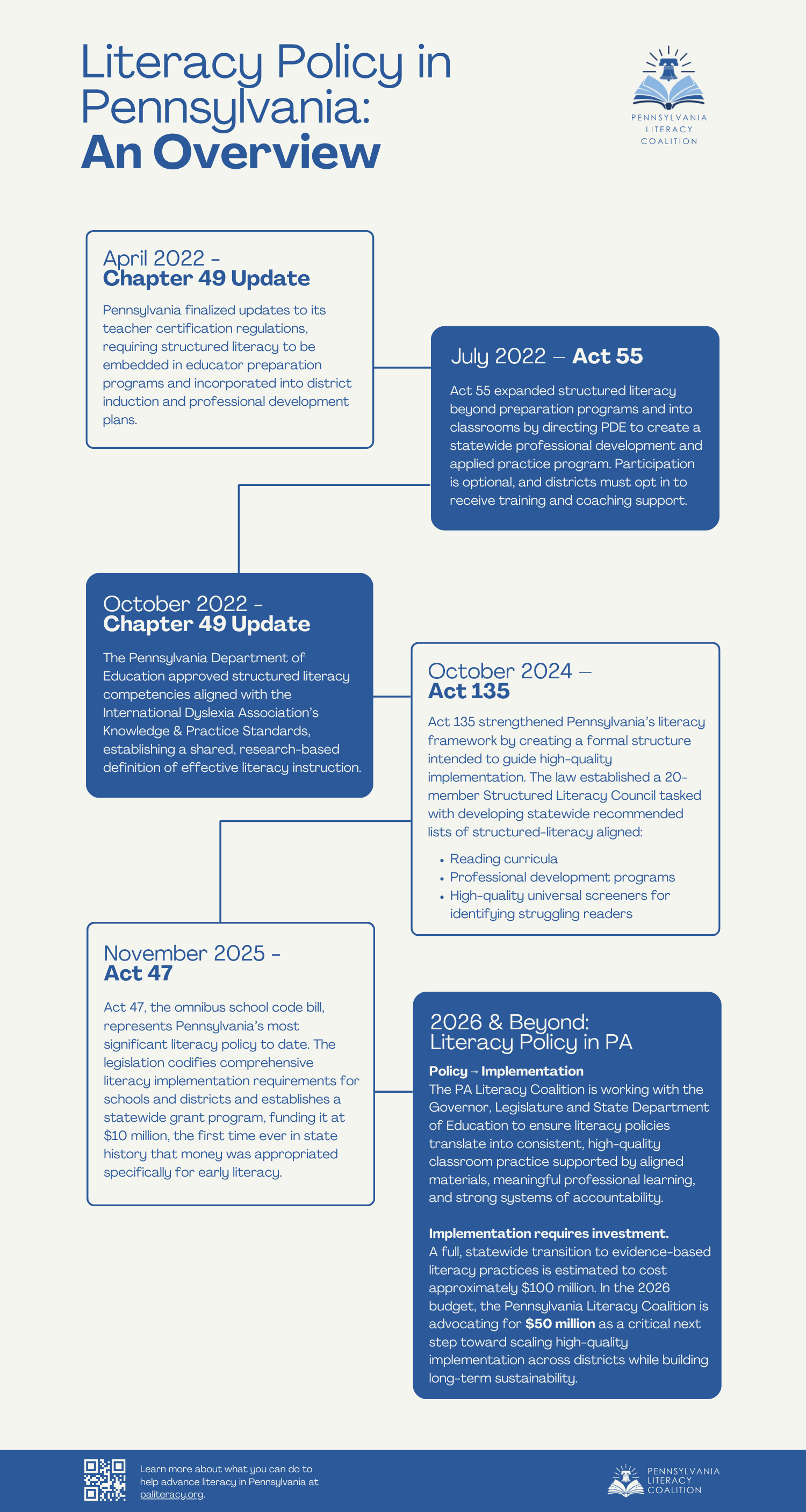
Revisions to Chapter 49 in 2022 required structured literacy to be embedded in educator preparation programs and incorporated into district induction and professional development plans.
Act 55 of 2022 created an optional pilot program to train teachers and instructional coaches in structured literacy.
Act 135 of 2024 established lists of evidence-based instructional materials and assessments.
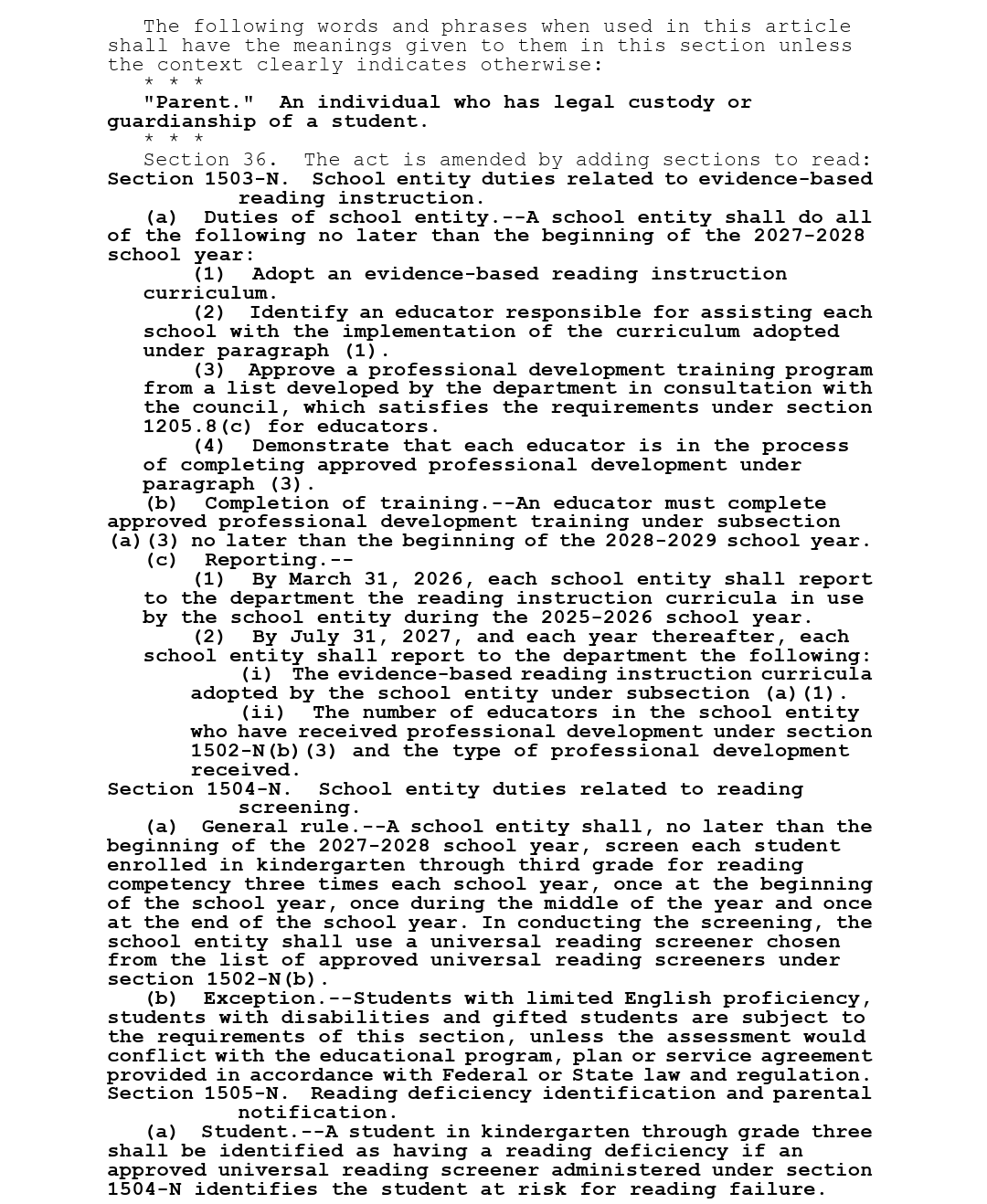
Act 47 of 2025 requires evidence-based curricula, educator training, universal K-3 literacy screening, and targetted interventions for struggling readers by the 2027-28 school year.
These measures signal strong bipartisan commitment to improving literacy outcomes.
But policy alone does not change instruction. Implementation does.
While Pennsylvania has made meaningful progress, significant gaps remain:
No dedicated statewide funding exists for ongoing, in-service literacy training or for procuring high quality instructional materials
Districts lack cohesive statewide implementation guidance and support
As a result, districts are being asked to meet ambitious new requirements under Act 47 without the dedicated resources necessary to ensure a smooth and consistent transition.
Without sufficient funding and coordinated statewide support, Act 47 risks functioning as an unfunded mandate—and the impact of recent reforms may remain uneven across districts.
Strategic investment, clear guidance, and strong implementation are essential to realizing the full promise of Pennsylvania’s literacy reforms.
The Challenge: From Policy to Implementation
Act 47 of 2025

Classroom Practice
Our 2026-27 Priority
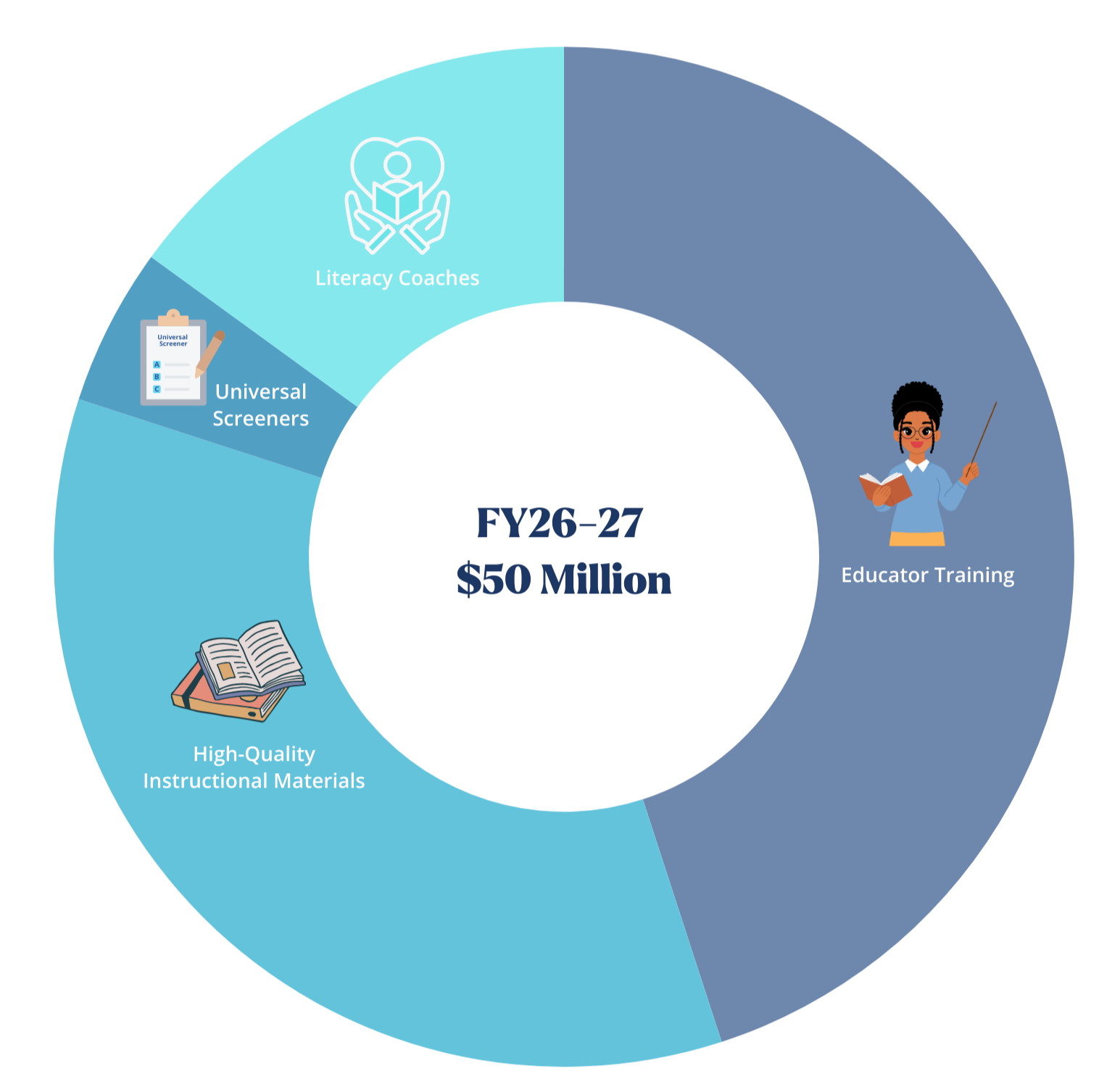
To move from policy to practice, Pennsylvania must make an initial $50 million investment this year to support:
High-quality educator training in evidence-based reading instruction
Classroom-embedded literacy coaching
Instructional materials aligned with research
Universal screeners and targeted interventions
This investment must be paired with coherent statewide guidance and implementation support to ensure consistency across districts.
The $50 million represents a down payment toward the estimated $100 million needed for a full statewide transition.
Pennsylvania’s Opportunity
States such as Mississippi, Louisiana, and Tennessee have demonstrated that comprehensive literacy reform—paired with sustained funding and strong implementation—can significantly improve reading proficiency.
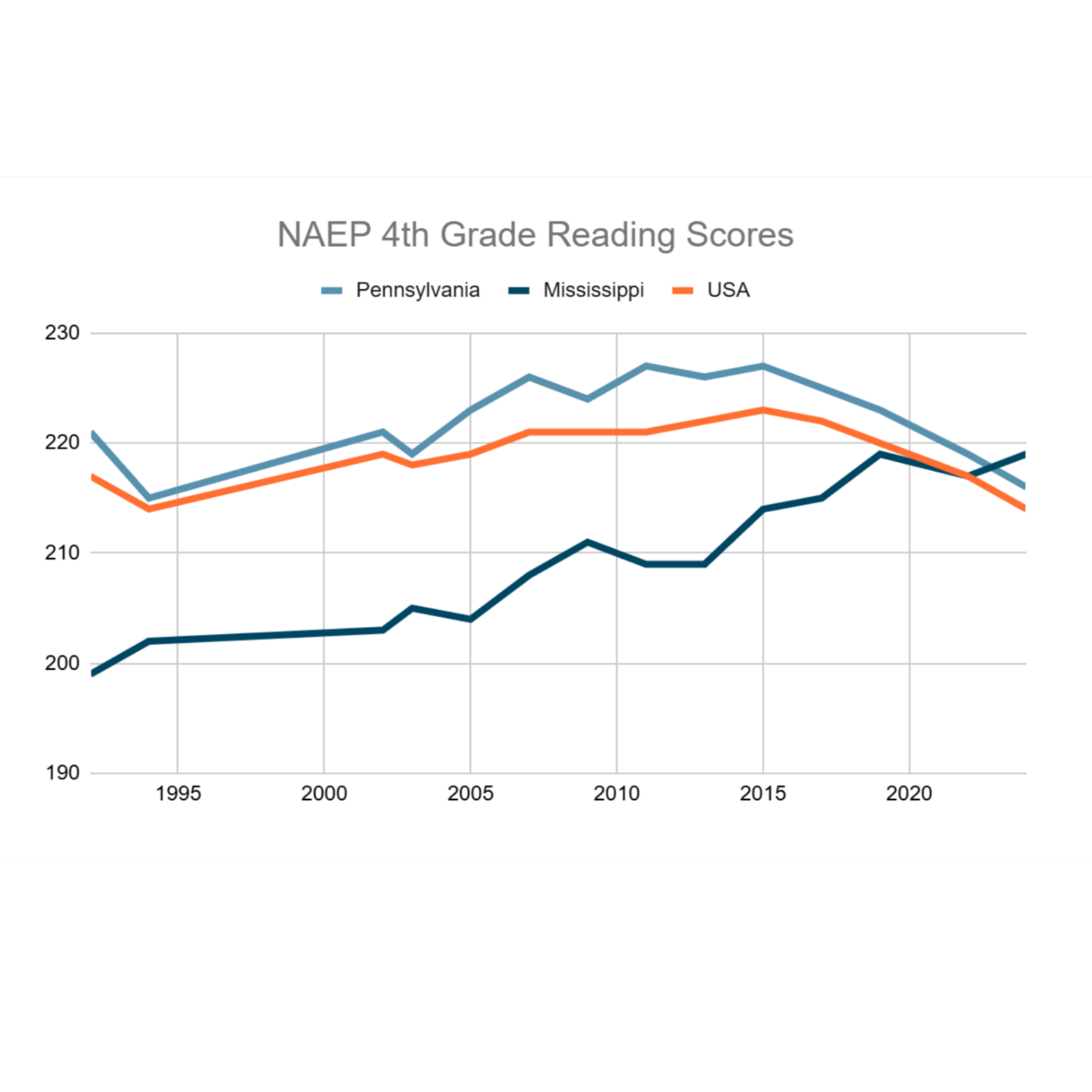
Mississippi’s Literacy-Based Promotion Act required educator training, coaching, screening, and intervention. Within a decade, Mississippi moved from near the bottom of national fourth-grade reading rankings to the top tier of states on the National Assessment for Educational Progress (NAEP).
Their progress underscores a clear lesson: when policy, funding, and implementation align, measurable gains follow.
Pennsylvania has the opportunity to do the same.
The Stakes
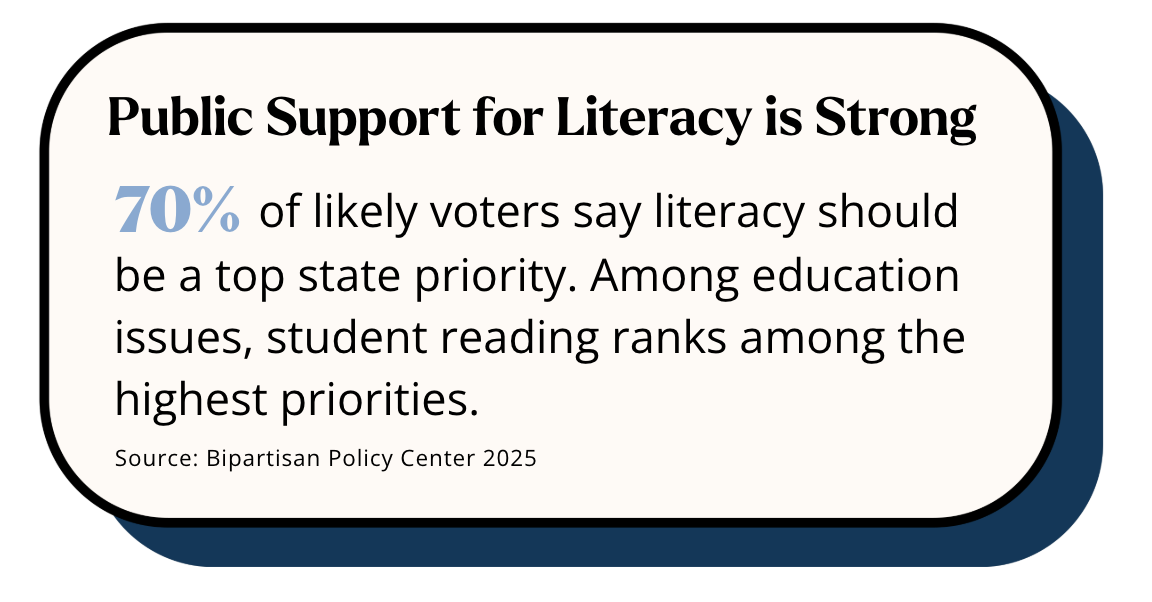
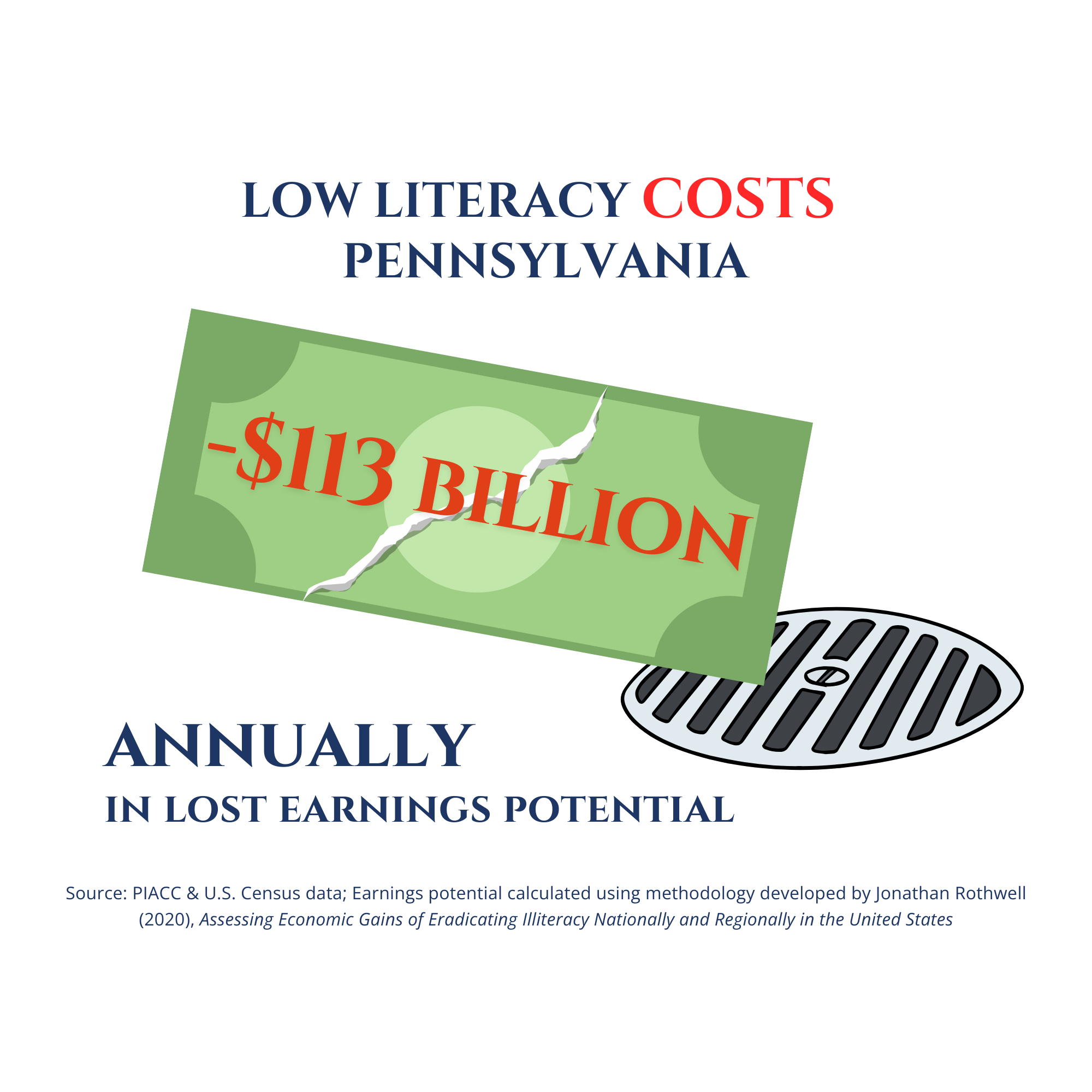
If we fail to act, the status quo will continue to cost Pennsylvania an estimated $113 billion in lost annual economic output.
The path forward is clear.
With strategic investment and coordinated implementation, Pennsylvania can become a national leader in literacy growth.